Includes all air air ticketing certifications required for IATA Recognition + Visa Course Best Option
FREQUENTLY ASKED QUESTIONS
If you read all the questions and answers provided below, we guarantee that you will have all the information you need, and most of your doubts or queries will be addressed without the need for additional counseling.
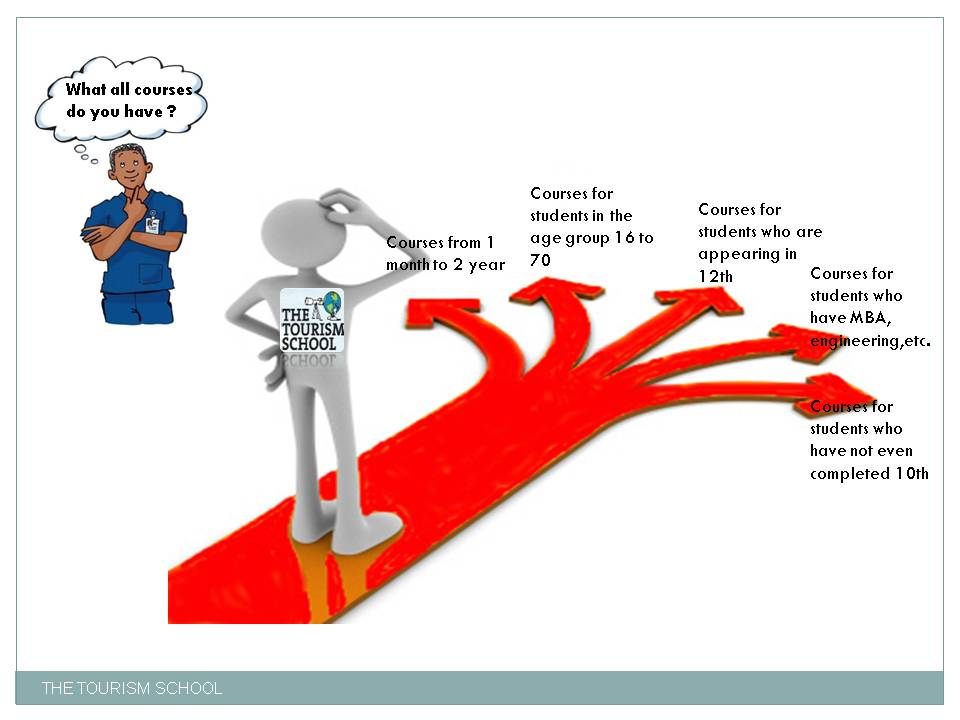
1. Which course should I join, as there are so many options? ANSWER: This depends on your qualifications and interests. If you are interested in Air Ticketing, you should choose a GDS or Aviation Diploma. If you prefer roles related to travel operations, consider the Foundation or Travel Agency Management Diploma. If you aim to start your own business, the Entrepreneur or Travel Business Course is ideal. For those seeking a Post Graduate Diploma and higher starting salaries, the Advanced Diploma courses are recommended.
2. What is the best course for a 12th-pass student, and what are the institute's timings? ANSWER: The best courses for students who have completed 12th grade are the Travel and Tourism Management Foundation Diploma or the Aviation & Travel Management Diploma. The institute's official hours are 9 AM to 6 PM. Students visiting for counseling or admissions are requested to arrive between 11 AM and 5 PM.
3. Which is the best course for graduates, final-year students, or those who have dropped out of college?ANSWER: For graduates or undergraduates, Travel Agency Management is best if you have limited time. If you can commit more time and want to start with a higher salary, the Advanced Diploma is the better choice.
4. Which course should I take to become a Tour Guide? ANSWER: The short-term course to become a Tour Guide is the Travel Package Manager course. For those who can commit to a one-year program, the Travel and Tourism Management Foundation Diploma is recommended.
5. Which course should I do to become an International Tour Guide? ANSWER: You should enroll in either the Foundation Diploma or the Advanced Diploma.
6. I want to learn air ticketing; which course should I take? ANSWER: If you want to focus exclusively on Air Ticketing, you can choose between the 1.5-month or the 3-month Air Ticketing course.
7. I want a job that involves traveling; which course is right for me? ANSWER: For jobs involving travel, you should join the Foundation or Advanced Diploma. If you have less time, the Travel Agency Management course is a great 6-month option (which can also be completed in a fast-track 3-month mode).
8. I want to work at an airport; which is the most suitable course? ANSWER: If you want an airport job, the Aviation or Foundation Diploma courses are the most suitable.
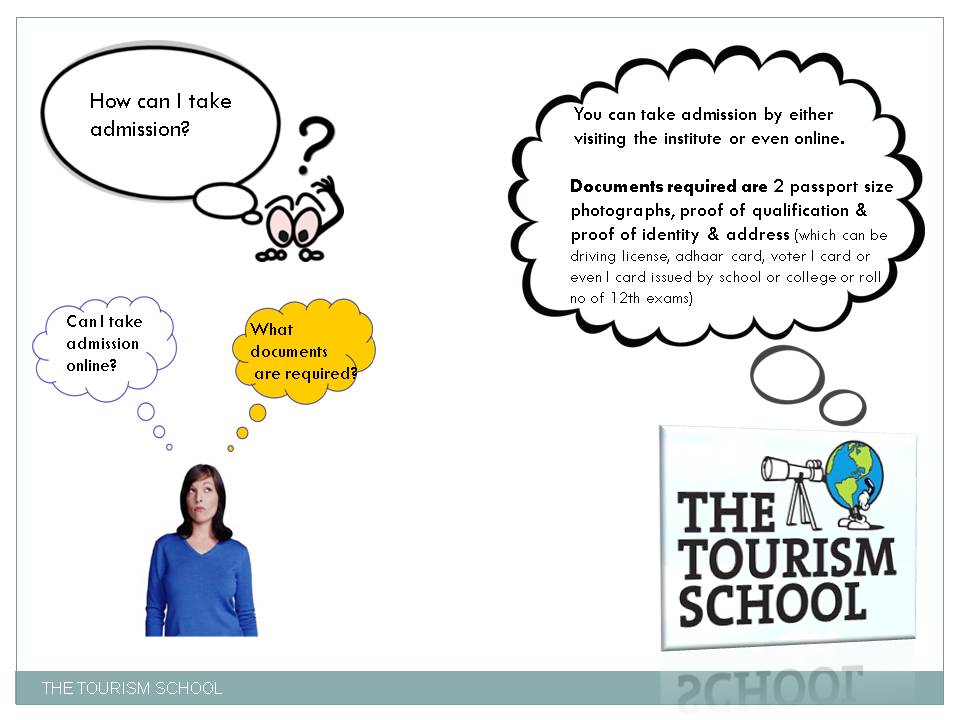
9. What is the admission process? ANSWER: First, students must visit the institute to understand the available courses. If the student and their parents decide to proceed, they must pay the first installment of the fees and submit four passport-sized photographs, along with photocopies of their identity and qualification proofs. The process is also explained on our website here:
10. Can a student take admission without visiting the institute? ANSWER: Yes, students can complete the admission process remotely by following the Online Admission Process:
11. Is there an interview or entrance exam for admission to The Tourism School? ANSWER: No, there are no interviews or entrance exams for admission.
12. How many interviews will the institute send us for? ANSWER: There is no limit to the number of interviews the institute will arrange for you.
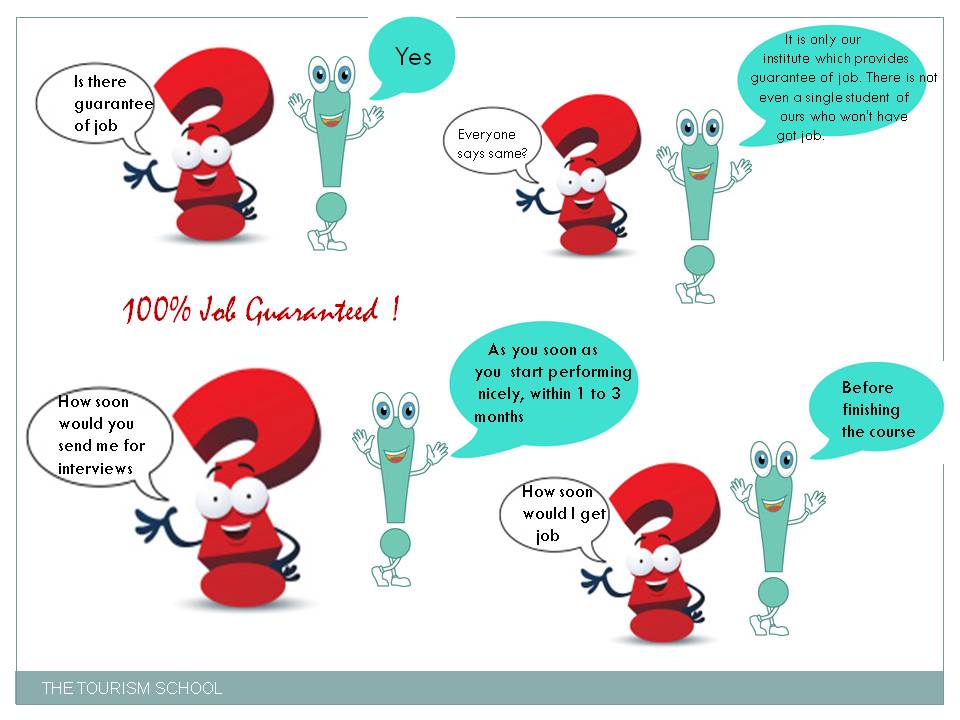
13. What if I don’t get a job? ANSWER: If you follow the instructions, adhere to the rules, and pass all your exams, it is highly unlikely you won’t get a job. Everything at The Tourism School is taught through practical methodology to ensure you are job-ready.
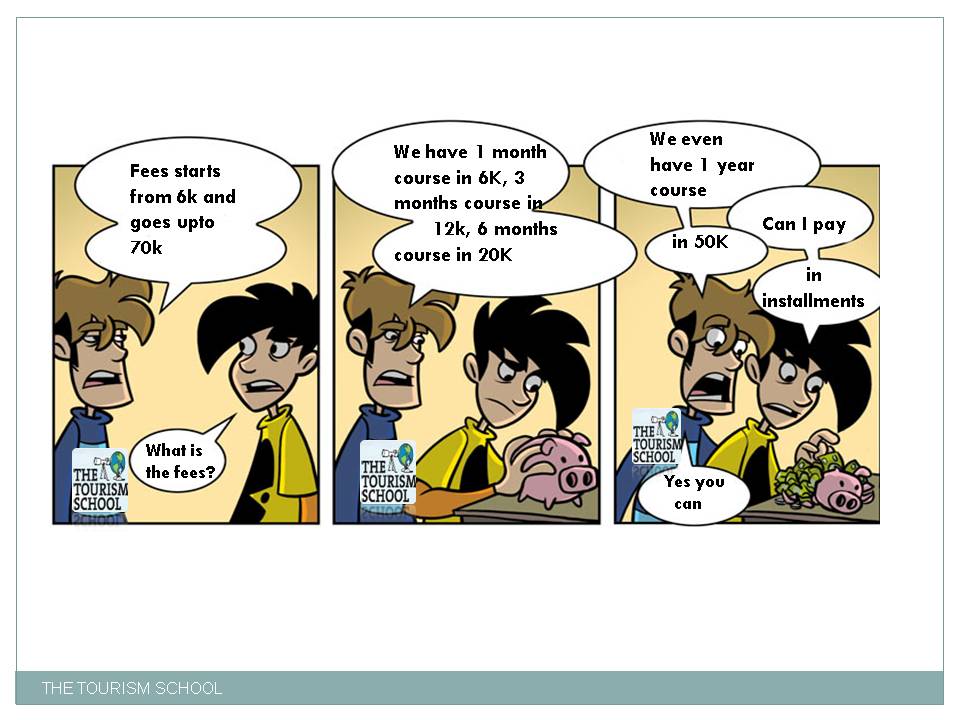
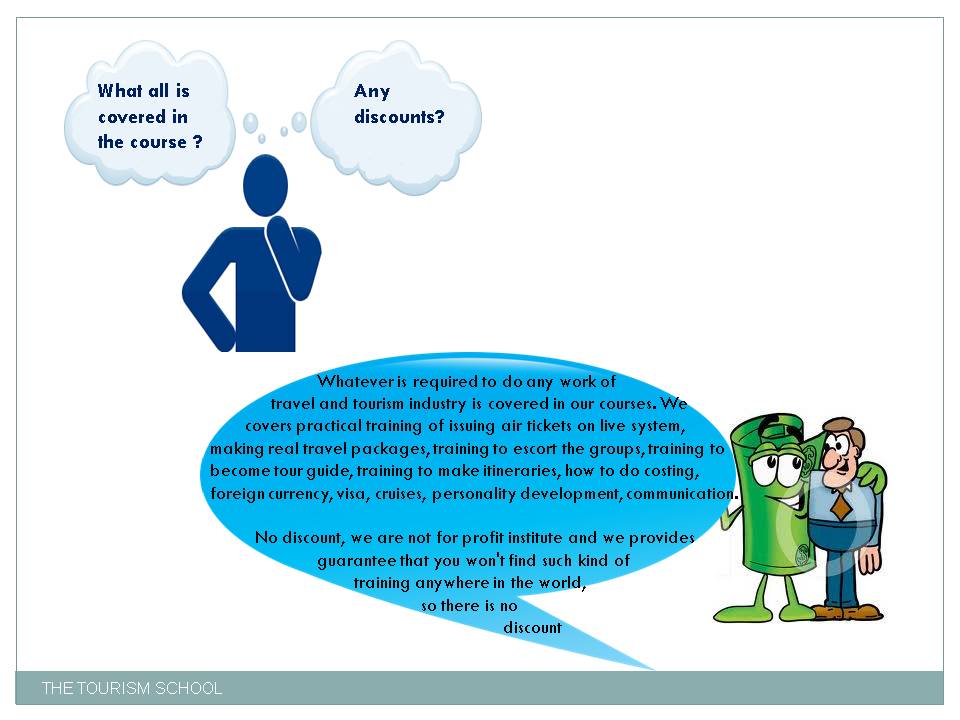
14. Are there any discounts available? ANSWER: No, there are no discounts, and there are never any hidden charges.
15. Are GST or other taxes included in the fees? ANSWER: Yes, the fees mentioned on our "Course Fees" page are inclusive of all applicable taxes.
16. Are there any hidden charges? ANSWER: No, there are no hidden charges.
17. When do admissions start? ANSWER: We typically start a new batch every second month. However, because seats are limited, we suggest students register as soon as they are sure about joining. You can then choose your start date from the upcoming batches.
18. What if I miss a few classes? ANSWER: If you miss a class, you can attend the same session in another ongoing or upcoming batch without extra charges. However, it is the student’s responsibility to track when that specific topic is being covered in other batches by checking with the faculty.
19. Is the fee refundable? ANSWER: No, fees and charges are non-refundable under any circumstances.
20. What is the difference between the 1.5-month and 3-month Air Ticketing/GDS courses? ANSWER: The 1.5-month course provides limited practice on the live system. The 3-month course offers an additional month of practice on the live air ticketing system. Furthermore, students in the 3-month course can return for practical classes even after finishing their course at no extra cost; this facility is not available for the 1.5-month course.
21. What is the difference between the Aviation and Foundation Diplomas? ANSWER: The Aviation Diploma has lower fees, whereas the Foundation Diploma has higher fees. The Foundation Diploma covers comprehensive topics like Travel Packaging, Tour Guiding, and Travel Management, which are not part of the Aviation Diploma. There are also more opportunities for trips and outdoor activities in the Foundation program. Additionally, Foundation students learn how to start their own travel agency and receive lifetime assistance if they choose to do so.
22. What is the difference between the Foundation and Advanced Diplomas? ANSWER: The Advanced Diploma involves higher fees but offers more intensive practical and destination training, including far more outdoor sessions. A key difference is that Advanced Diploma students participate in international study trips—where classes are held at international institutions for better certification—at the cost of The Tourism School. Advanced Diploma students usually start their careers at a managerial level.
23. Which course should I take to start my own travel agency? ANSWER: Take the "Travel Agency Management Entrepreneur" course if you want to start a large-scale agency, or the "Travel Business" course if you want to start a home-based business.
24. Do I need to buy books? ANSWER: No, you won't need to buy books. We provide comprehensive notes. Since our training is highly practical, we focus more on hands-on work than textbooks.
25. Are there additional charges for outdoor activities? ANSWER: No, there are no additional charges for outdoor activities.
26. Are there exams? ANSWER: Yes, there are class tests, surprise tests, and final examinations. Exams are a mandatory part of every course.
27. What is the minimum score required to pass? ANSWER: A minimum of 50% is required to pass any exam.
28. What are the chances of failing? ANSWER: Students who are regular in attendance and complete all exercises are highly unlikely to fail.
29. What happens if I fail my exams? ANSWER: Failing a class or surprise test will reduce your overall percentage but is not critical. If you fail the final exam, you can still receive a Participation Diploma, and our job placement process remains the same. Alternatively, you can pay a re-examination fee to retake the exam.
30. I am a graduate; which course should I take? ANSWER: While graduates are eligible for any course, the Advanced or Foundation Diplomas are the most highly recommended for this level of education.
31. I have only passed 10th grade; can I enroll? ANSWER: Yes, but please note that we cannot provide a job guarantee for students who have only completed the 10th grade.
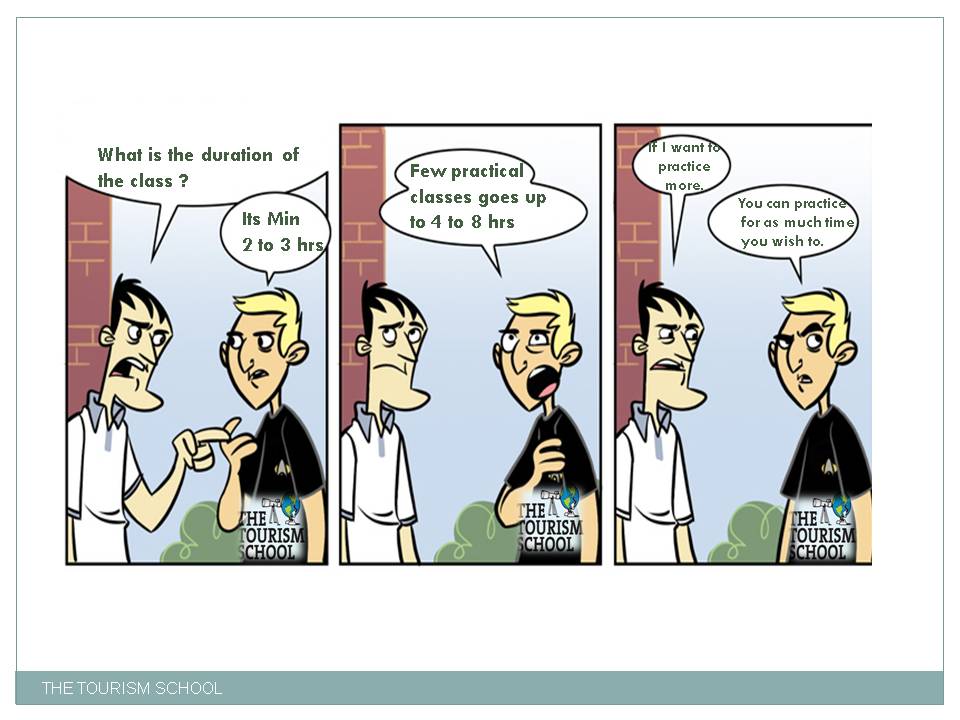
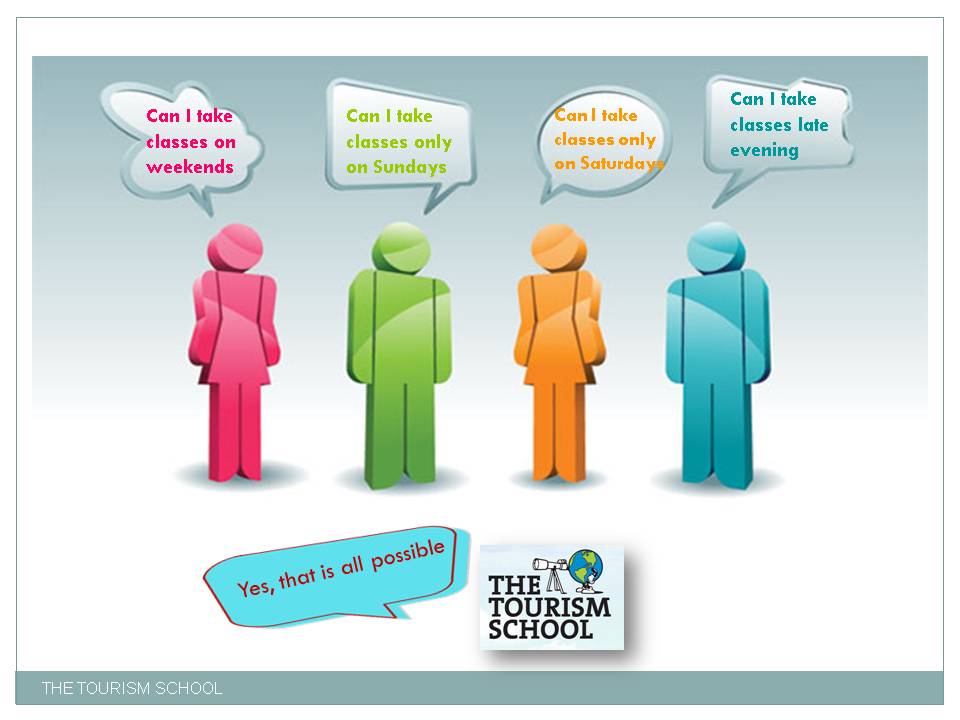
32. What are the class timings? ANSWER: We typically have three batches a day: 9:30 AM to 11:30 AM, 12:00 PM to 2:00 PM, and 3:00 PM to 5:00 PM. Late evening classes are available exclusively for the Entrepreneur course.
33. Are there weekend or Sunday-only classes? ANSWER: Yes, but for weekend classes, students must pay the full fee in advance and wait at least 30 days from the date of payment to begin.
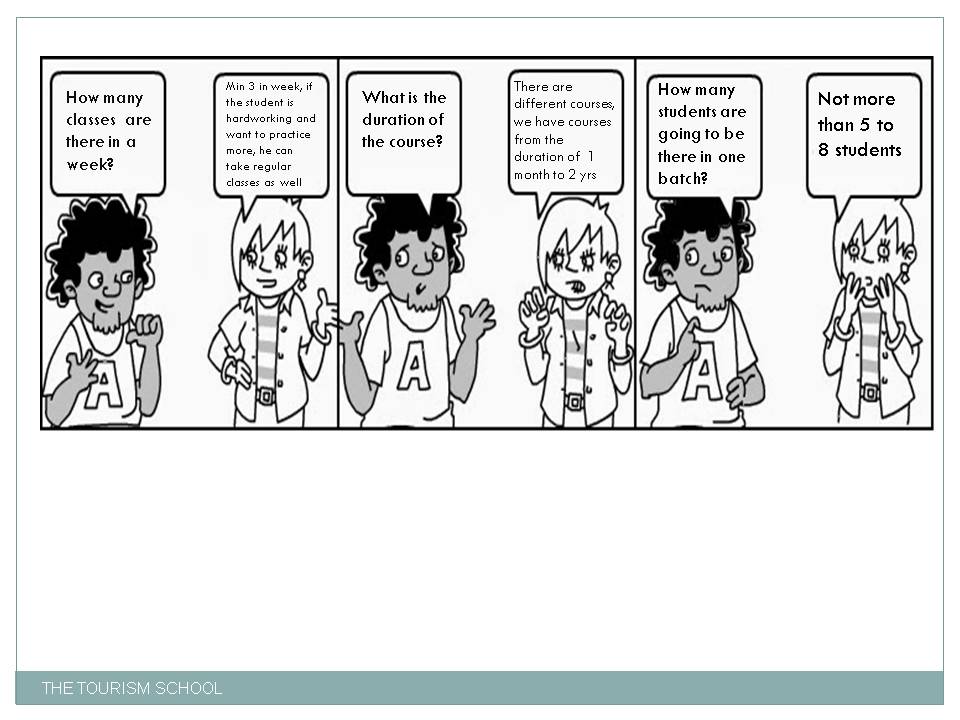
34. How many students are in a class? ANSWER: This varies by topic. For highly practical air ticketing sessions, classes may have only 3 to 5 students. For group training, there may be 20 to 25 students.
35. How many classes are there per week? ANSWER: This depends on the course. Usually, three classes per week are mandatory, and we suggest two additional sessions for practical work. Practical practice sessions take place between 3 PM and 6 PM and are never held on Saturdays.
36. How can I learn more about The Tourism School? ANSWER: You can find more information on our "About Us" page:
37. What kind of jobs can students get after completing a course? ANSWER: We prepare students for over 70 different job profiles across our various courses. You can watch a video detailing these profiles here:
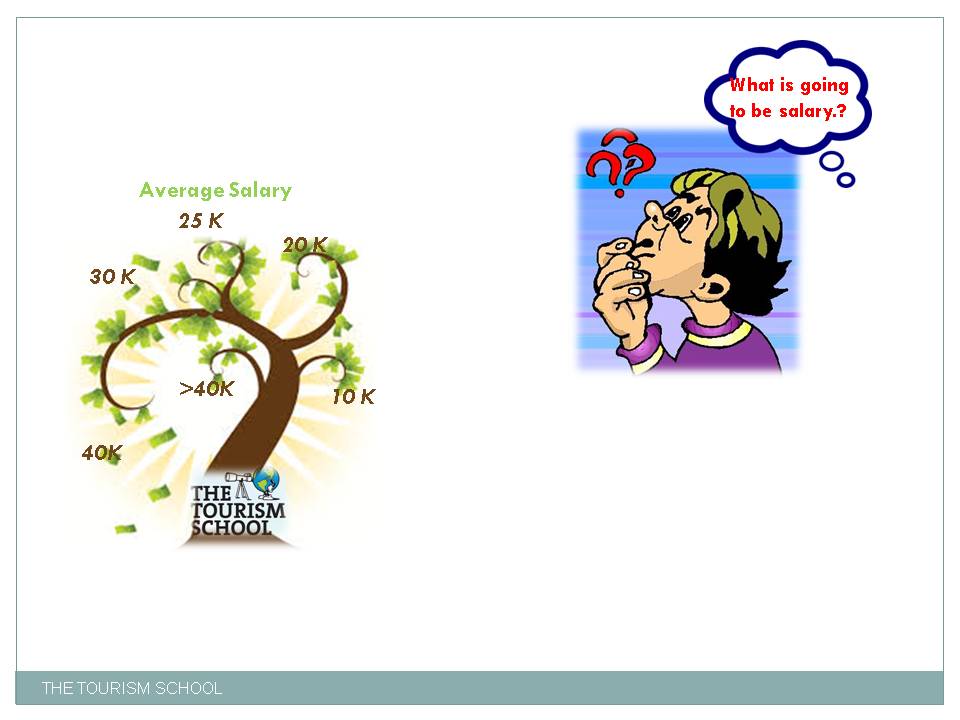
38. Where are alumni of The Tourism School currently working? ANSWER: Our students work for major airlines like British Airways and top travel companies like MakeMyTrip, Thomas Cook, Yatra, and Travel Triangle. For more details, visit our "Jobs & Salary" page
39. Is it possible to get a government job in travel and tourism? ANSWER: Yes, it is very much possible. You can watch a video of students who secured government jobs here:
40. Is it possible to get a job outside of India? ANSWER: Yes, a significant number of our students are currently working in various countries abroad.
41. Is there an age limit for joining? ANSWER: Most courses have no age limit. However, the Aviation and HR Diploma courses have a maximum age limit of 25.
42. Can I get a trial or demo class? ANSWER: No. Due to the high volume of queries, we are no longer able to provide demo or trial classes.
43. Is there a charge for counseling? ANSWER: No, counseling sessions are provided free of charge.
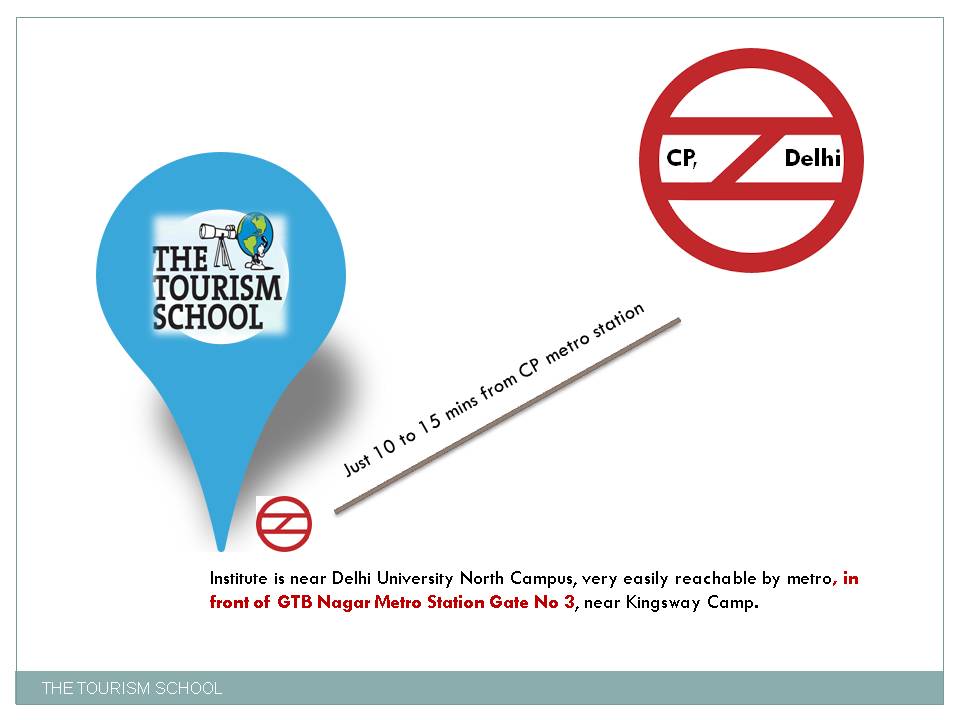
44. How many branches does The Tourism School have? ANSWER: We have one main branch in India, located at: 801 Rohit House, 3 Tolstoy Marg, Connaught Place, New Delhi.
45. Does the school provide hostel or PG accommodation? ANSWER: No, the school does not have its own hostel or PG facilities. Students must arrange their own accommodation.
46. What are the suggested locations for PG accommodation? ANSWER: We suggest Laxmi Nagar (direct metro access, approx. 10 minutes away), West Delhi (Tilak Nagar, Subhash Nagar), or the Delhi University North Campus area.
47. Is the HR Diploma course linked to the travel courses? ANSWER: No, the HR and Office Management Diploma is an entirely separate course with no link to our travel-related programs.
48. Where does the school have placement tie-ups for the HR Diploma? ANSWER: We provide a job guarantee for the HR and Office Management Diploma, offering internships and jobs with major corporates based on student performance. You can watch testimonials here:
49. Where do the free trips included in the courses go? ANSWER: Trips can be to any destination worldwide; these are not determined in advance and vary by batch.
50. Are internships arranged by the school or the student? ANSWER: Internships are arranged by The Tourism School. High-performing students often transition directly into full-time, salaried roles.
51. Are internships paid? ANSWER: Yes, all internships provided are paid.
52. Which courses have the highest number of admissions? ANSWER: The Travel Agency Management Foundation Diploma, the Entrepreneur Diploma, and the 6-month Travel Agency Management course are our most popular programs.
53. What is the eligibility for the 3-week Air Ticketing course? ANSWER: This course is strictly for individuals who already have experience in air ticketing or a travel agency. Admissions are granted based on an interview.
54. How many alumni are successfully running their own travel agencies? ANSWER: Over 100 students are currently running successful travel companies. You can see their testimonials here:
55. How much can I earn if I start my own agency through the Entrepreneur Course? ANSWER: Earnings depend on your hard work and time commitment. Typically, entrepreneurs start earning between ₹30,000 and ₹40,000 by the third month, with many earning significantly more. Some students have reported earnings exceeding ₹2 Lakhs per month shortly after starting.
56. How much investment is required to start a travel business? ANSWER: It is possible to start a travel company with zero investment. This depends entirely on your business model. We have students who started with no capital and others who invested several lakhs.
57. What is the success rate for Online or Distance Learning courses? ANSWER: We have a high enrollment rate for Online and Distance Learning, with a success rate of over 90%. While physical classes are ideal, our online courses provide a similar level of quality for those outside Delhi or India.
58. Is there a mandatory uniform? ANSWER: No, there is no uniform. However, students are expected to dress smartly and wear proper shoes. Floaters, slippers, and sandals are not permitted.
59. Can I start classes the same day I enroll? ANSWER: No. We need to generate enrollment numbers and issue identity cards. Students typically need to wait 3 to 4 days after completing admission formalities before starting.
60. How many faculty members teach in each course? ANSWER: Typically, a minimum of four different faculty members are involved in teaching each course to provide diverse expertise.